The Problem with Modern Metal Guitar Tone
Nail The Mix Staff
The Evolution of Metal Tone: From Real Amps to Digital Dominance
Let's take a quick trip back. Twenty years ago, if you were in the metal scene, your choices for high-gain glory were pretty consistent. Think Peavey 5150s, hot-rodded Marshall JCM800s, and Mesa Boogie Dual Rectifiers. These amps just worked. They sounded good, and while subjective, a consensus formed around them.
Then came the digital revolution. Early amp sims and modelers like Line 6 Pod Farm started appearing. To be honest, they didn't always respond like a real amp, and getting them to sound great on a record often took a heroic effort. Producers like Joey Sturgis famously wrestled incredible tones out of Pod Farm, but it involved a ton of EQ and processing – next-level work that helped spawn entire genres. Other early contenders like IK Multimedia Amplitube and LePou plugins (Lecto, Hybrit, etc.) were improvements, but still often required significant tweaking. For those with access to a wall of boutique amps and a killer mic locker, diving deep into these early sims wasn’t always a priority.
Fast forward to around 2021, and the landscape had transformed. Companies like Neural DSP and STL Tones (and later, up-and-comers like Bogren Digital) blew the doors wide open. Suddenly, plugins sounded incredible right out of the box, shockingly close to the real deal. Some producers even bridge both worlds with hybrid setups—see how Sam Guaiana runs a real Revv amp head into a reactive load with a plugin cab sim for Intervals. For a deeper look at how Sam Guaiana uses those hybrid setups to deliver the melodic lead guitar hooks at the heart of the Intervals sound, see his breakdown of the Intervals lead guitar and vocal melody approach.
Why the "Sameness" Argument Persists (And Why It's Mostly Bogus)
So, if the tools are so good, why do people still complain that modern metal guitar tones are generic? The answer often lies in how these incredible tools are used.
Back in the day, a common formula was a Tube Screamer pedal into a Peavey 5150 block letter head, driving a Mesa Oversized cabinet loaded with Celestion Vintage 30 speakers, mic'd up with one or two Shure SM57s (perhaps using the Fredman technique). And it worked! Nobody really complained about tones sounding identical because there was enough inherent variation. Different pieces of wood in the cabs, slight differences between individual amp units, mic placement nuances, and room acoustics all contributed to unique sonic fingerprints. For a modern example of this hardware-driven approach taken to the extreme, see how Kurt Ballou pairs dual amps with contrasting speakers and surgical mic placement for Converge's guitar tones. For a look at how Carl Bown gets lead guitars to soar in a dense metal mix using a Kemper JCM800 profile with dynamic EQ and the Waves CLA-3A, see the Bullet For My Valentine lead guitar mixing breakdown. For a look at the classic dual-mic setup and EQ strategies that gave Bring Me The Horizon their signature aggressive sound, see Fredrik Nordström’s BMTH guitar tone breakdown.
With modern amp sims and Impulse Responses (IRs), that physical variation can be lost if everyone uses the same digital chain. It's incredibly convenient to call up a preset for Archetype: Gojira or your favorite 5150 sim, load a popular IR, and get an instantly mix-ready tone. But when thousands of players do exactly that, a certain homogenization can creep in. We have more options than ever, but many players gravitate towards the digital equivalent of that classic 5150 setup. One way to break out of this is blending real amps with amp sims—see how Joe Rickard combines quad-tracked Wizard and 5150 recordings with a transient-shaped DI layer on In Flames.
However, to say all modern metal tones sound the same is just plain ignorant. Listen to bands like Wage War, Gojira, Humanity's Last Breath, Loathe, Trivium, Leprous, Periphery, The Zenith Passage, Igorrr, or Whitechapel. None of these bands sound alike, despite likely using many of the same digital tools. The idea that "everything sounds the same" isn't new, either. Twenty years ago, people said the same about Andy Sneap's mixes, claiming he used the same preset for everyone. But Killswitch Engage didn't sound like Testament, which didn't sound like Nevermore, which didn't sound like Cradle of Filth. It was bull then, and it's bull now. The difference lies in the details and the willingness to experiment.
The Unsung Hero of Unique Tone: Impulse Responses (IRs)
What Exactly is an IR?
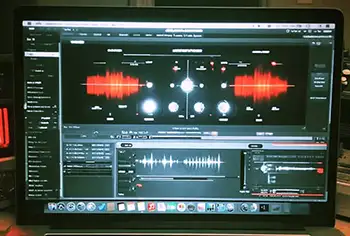
In simple terms, an IR is a WAV file that captures the sonic fingerprint of a guitar cabinet, the speaker(s) inside it, the microphone(s) used to record it, and the acoustic space it was in. It doesn't capture your amp head's tone, pedals, or anything else that adds significant gain, compression, or saturation. It's strictly the cab, mic, and room. You load this WAV file into an IR loader plugin (like Lancaster Audio's Pulse, STL Tones Libra, GetGood Drums Studio Cabs, or the loaders built into most amp sims like those from Neural DSP or Bogren Digital's Rev C). The IR loader then uses clever math to apply that captured cabinet sound to your direct amp sim signal.
The effect an IR has on your tone is profound. Think about the components of guitar tone as a pie chart (these are rough estimates, but illustrate the point):
- Pick: ~4%
- Guitarist's Hands: ~46%
- Amp Head: ~15%
- Cab & Mic Combo: ~35%
Clearly, the cabinet and microphone are huge contributors, and as many producers will tell you, cabs often provide more tonal variety than amp heads. Using amp sims and IRs actually helped many players understand this for the first time. They could instantly A/B different virtual mics (e.g., a dynamic like an SM57 versus a condenser) or different cabinets (a Mesa V30 cab versus a Marshall 1960 with Greenbacks) and hear the dramatic differences without ever touching a real mic. For a real-world example of how mic selection shapes tone, see how David Castillo blends multiple guitar mics to craft Decapitated's guitar tone. Remember Catharsis Impulses? For many, that was an early "aha!" moment for the power of IRs.
The crazy thing is, an IR file itself sounds like a short, weird burst of noise. But that little file is what makes your amp sim go from a direct, fizzy sound to something that sounds like a mic'd up amp in a room. Want to take that even further? You can blend room IRs with your close-mic IRs to add real depth and dimension to your amp sim tone.
Taking Control: Making Your Own IRs for Ultimate Individuality
If you use amp sims and want truly unique tones that nobody else can duplicate, the answer is surprisingly simple: make your own IRs.
It's not as daunting as it sounds, and it's the easiest way to inject serious individuality into your sound.
Why Bother Making Your Own?
- Immortalize Your Gear: Got an amazing, rare, or modded cabinet you love? Make an IR of it, and you can use its sound anywhere, anytime, without lugging the physical cab.
- Capture Unique Setups: Renting a studio with a killer vintage Marshall cab you can't take home? Make an IR!
- Unconventional Preferences: Maybe you like a mic placement or a cab/speaker combo that isn't commonly available in commercial IR packs. Make it yourself!
How to Make an IR (The Basics)
While it might take a few tries to nail it, making an IR isn't a weeks-long process like creating a sample library. You'll need some gear:
- A guitar cabinet.
- A microphone (or several).
- A power amp: Either a clean, solid-state power amp (for the purest capture) or the power amp section of a tube head (which will impart more of that head's character).
- An audio interface and DAW.
There are a few common methods:
- White Noise Method: Send white noise through your power amp and cab, record the mic'd result, and use deconvolution software to create the IR. This aims for a pure capture.
- Sine Sweep Method: Similar to white noise, but you send a sine wave sweep through the chain. Different tools, similar pure-capture goal.
- Amp Head Power Amp Method: Use the power section of your actual guitar amp. This is the most "colored" way, as it captures characteristics of that specific power amp.
To demonstrate the impact, imagine taking the same DI guitar part, running it through the exact same amp sim (say, Archetype: Gojira with its internal cab sim bypassed), and then loading four different IRs. The tonal variation would be massive, even though the only thing changing is that small IR file. Each IR would bring out different frequencies, emphasize different resonances, and provide a unique feel.
If making your own IRs isn't feasible right now (maybe you lack the gear or space), definitely explore high-quality commercial IRs from creators like Bogren Digital, Lancaster Audio, GetGood Drums, Ownhammer, or Jeff Dunne. Experimentation is key.
Beyond IRs: Fine-Tuning Your Signature Metal Sound
While IRs are a massive part of the puzzle, don't stop there! The beauty of modern tools is the unprecedented level of control.
- Experiment with Amp Sims: Don't just stick to one. Try different models within a plugin, or explore how to dial in a sick tone with sims from various developers. A Neural DSP Nolly will sound different from a Bogren Digital MLC Subzero 100. You can even blend multiple amp sims together—see how Carson Slovak combines dual Diezel profiles through STL Tones Tonehub for Erra's rhythm tone.
- Dial in Your EQ: This is where you sculpt. Beyond the classic mid-scoop, get surgical. Find and tame harsh fizz (often in the 5kHz-10kHz+ range). Boost frequencies that add punch or clarity. For a great example of this in action, see how Sylosis reclaims low-end while avoiding mid-range fatigue. For a hands-on walkthrough of how Josh Middleton quad-tracks with STL Tonality—starting with guitars before drums and using overdrive for tightening rather than gain—see the Sylosis “Crushing Tone” STL breakdown. For another approach, see how Henrik Udd uses unconventional EQ and saturation moves on Architects guitars. For handling the extreme low-end management challenges of extended-range guitars—where EQ and dynamic compression work together section by section—see how this is approached in the Animals As Leaders mixing breakdown.
- Use Compression Wisely: Compression can tighten up chugs, add sustain to leads, or help guitars sit consistently in a dense mix. For an advanced example, see how Acle Kahney uses dynamic EQ and parallel bus automation to shape Tesseract’s guitar dynamics.
- Don't Forget the Overdrive: The classic digital Tube Screamer (or its many variants found in amp sims) is still a go-to for tightening the low end and adding aggression before the "amp."
The tools are better than ever. The only limit is how far you're willing to push them and your creativity. If you're serious about crafting tones that truly stand out, moving beyond presets is essential.
Your Tone, Your Rules
The idea that modern metal guitar tone is all the same is a myth, one that's been repeated through the decades. Yes, a level of standardization occurs when new technology is widely adopted, but that's always been true. The real difference lies in how you use the tools at your disposal, because the quest for killer tone is ultimately a personal one.
We have more options for sonic destruction and creation than ever before. While it's easy to stick to tried-and-true formulas, those who push the boundaries, especially with tools like custom IRs and deep amp sim tweaking, can craft truly unique and memorable sounds. For a prime example of boundary-pushing production, see how Daniel Braunstein blends octave-down guitar layers, vocoders, and breakbeat elements into Spiritbox's mix. For a masterclass in building a creative environment designed to break from formula and breed genuine surprise, see how Devin Townsend structures his unpredictable songwriting process. For a great example of blending synths and distorted guitars into a single massive texture that goes beyond standard guitar tone, see how Kane Churko layers synths with Gemini Syndrome’s guitars.
The key takeaway? If you want a guitar tone that stands out from the sea of sameness, don't just rely on presets or what everyone else is doing. Dig in, experiment, and make those tools your own. For one example of this kind of creative experimentation, see how Josh Schroeder uses parallel grit processing and layering to craft Lorna Shore's brutal guitar tone. For a different layering philosophy, see how Zach Jones blends contrasting “sizzle” and mid-range guitar layers to build Veil Of Maya's signature tone. For a completely different kind of layering challenge—blending live orchestral strings into a metal production—see how Fleshgod Apocalypse’s strings are mixed using surgical EQ and humanization techniques. For a real-world example of how small, deliberate choices—like swapping a single pick—can transform a tone from murky to lethal, check out how Andrew Wade crafts the signature Wage War guitar tone.
Want to see exactly how pro producers dial in unique, massive metal tones from scratch, explaining every plugin choice, EQ move, and mixing decision? At Nail The Mix, you get to watch world-class producers mix real songs from bands like Meshuggah, Gojira, and Periphery, month after month. It's your backstage pass to learning the techniques that will help you forge your own signature sound.