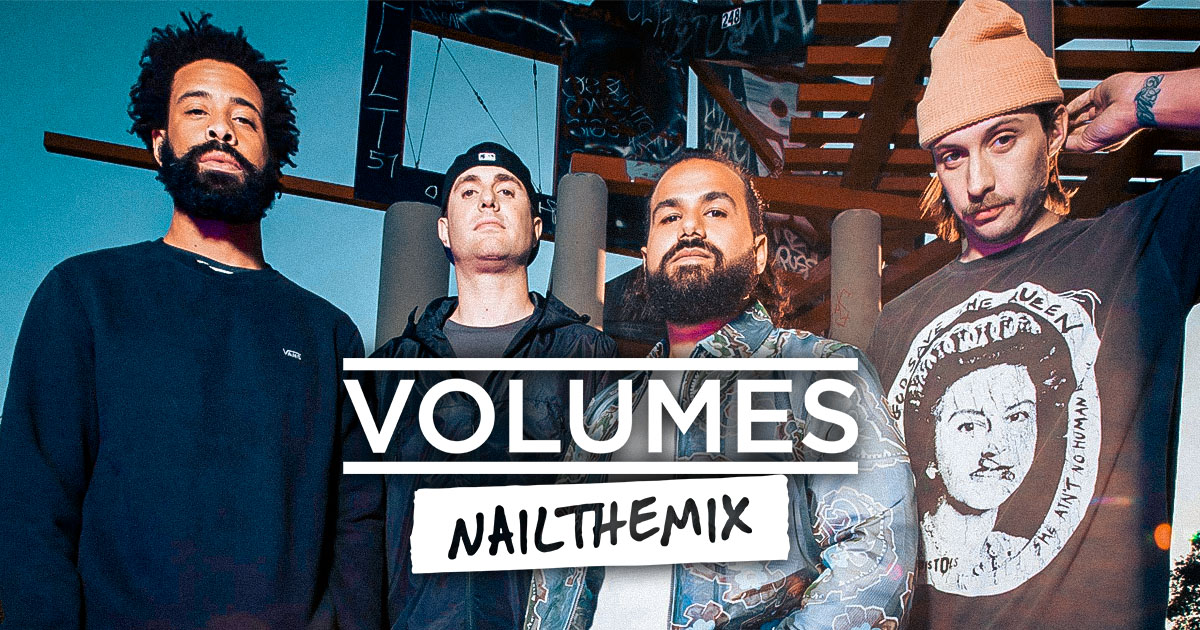
How To Blend Metal Kick Drum Samples Without Phase Problems (ft. Dan Braunstein & Volumes)
Nail The Mix Staff
Getting a kick drum to be punchy, clear, and massive in a dense modern metal mix is one of the biggest challenges producers face. You can stack a dozen incredible samples, but if they aren’t working together, you end up with a muddy, weak thud instead of a gut-punching transient. The culprit? Phase.
In his Nail The Mix session for the band Volumes, producer and mixer Daniel Braunstein breaks down his method for building a completely unique and powerful kick drum sound from multiple samples. The real secret isn’t some magic plugin—it’s an obsessive focus on the phase relationship between every single layer. Let’s dive into his process.
The Three-Part Kick: Building Your Foundation
Instead of routing all his samples to one track, Daniel immediately splits his kick drum into three distinct parts. This gives him granular control over each element of the final sound.
The “Main” Kick: The Body and Punch
This is the core of the sound. Daniel starts with a few of his go-to, reliable kick samples that provide the fundamental low-end weight and body. These are the samples that you feel more than you hear, establishing the kick’s presence in the mix. Think of this bus as the foundation upon which everything else is built.
The “Slap” Kick: Adding Definition and Attack
For modern metal, especially with fast double-kick sections, the attack of the beater is critical for clarity. For this, Daniel creates a “Slap” track. He often uses samples with a prominent high-end, like a classic Metallica kick he’s been using since he was 19, and then aggressively high-passes it. This removes the competing low-end and isolates the “click” and upper-mid “flab.”
This track is a dynamic tool. During brutally fast passages, he’ll automate the volume of the slap track up to ensure every single hit cuts through the chaos of guitars and cymbals.
The “Room” Kick: Creating Space and Depth
To keep the kick from sounding sterile and disconnected from the kit, Daniel blends in a “Room” bus. This consists of various room mic samples that add natural ambience, width, and a sense of space. These aren’t meant to be the primary sound but rather to surround the “Main” and “Slap” tracks, gluing them into the context of the full drum kit.
The Golden Rule: Get Your Sources Right First
Here’s one of the most important takeaways from Daniel’s workflow: get the source tones right before you even think about touching a plugin. Before reaching for an EQ, he focuses on selecting and balancing his chosen samples.
The goal is to create a powerful sound just by blending the raw samples together. This way, when you do start using processing like EQ or compression, you’re enhancing what’s already good, not trying to perform surgery on a sound that’s fundamentally flawed.
Phase Is Everything: The Key to a Punchy Kick
This is the step that separates a good kick sound from a great one. Blending multiple kick samples is a recipe for phase cancellation, where frequencies from different samples negate each other, resulting in a hollow, weak, and powerless sound. Daniel’s meticulous phase-checking process is the reason his kicks hit so hard.
The Step-by-Step Phase Check
Daniel’s process is simple but incredibly effective. You can do this in any DAW.
- Start with Your Main Sample: Solo your primary kick sample—this is your reference point.
- Introduce the Next Layer: Bring in your next kick sample.
- Flip the Polarity: Hit the phase/polarity invert button (often represented by a “ø” symbol) on the second sample’s channel. Flip it back and forth a few times while the kick plays.
- Listen Carefully: The difference is often not subtle. One position will sound fuller, fatter, and punchier. The other will sound thin, hollow, or “scooped.” Choose the setting that adds to the sound.
- Repeat for EVERY Sample: Do this for every single sample you add to the blend—including the slap and room layers—always checking them against the foundation you’ve already built.
How Phase Issues Kill Your Mids
Why is this so important? The “punch” of a drum often lives in the low-mids and midrange. As Daniel explains, the sound waves in these lower frequencies are much longer, which gives them more opportunity to overlap and cancel each other out. Your kick can lose its entire guts without proper phase alignment. The higher frequencies have much shorter, faster waveforms, so audible phase issues are far less common up there.
When “Out of Phase” Is a Good Thing
Interestingly, perfect phase alignment isn’t always the goal. Sometimes, an out-of-phase relationship can be used creatively. In the session, Daniel finds that one of his room samples, when left out-of-phase, actually creates a pleasing dip in the midrange. This acts like a natural EQ, scooping out some frequencies he didn’t want anyway. The key is to listen and make conscious decisions, not just assume “in phase” is always correct.
Advanced Blending: Multi-Samples and One-Shots
After getting the phase perfect, Daniel takes his sound a step further by blending different types of samples. His main kick group is built from multi-samples, which means each hit has slight variations in velocity and tone for a more natural feel.
To this, he adds a one-shot sample: a single, powerful, unchanging kick hit. He blends this in to act as a consistent “anchor.” This gives him the best of both worlds: the natural dynamics from the multi-samples and the unwavering punch and consistency of the one-shot on every single beat.
Build Your Own Massive Kick Tones
Crafting a killer metal kick drum is an art, but it’s built on a technical foundation. By splitting your kick into manageable parts, focusing on sample selection first, and—most importantly—meticulously checking phase relationships, you can turn a pile of samples into a cohesive, monstrous kick drum that will punch through any wall of guitars.
These techniques are a game-changer you can apply to your music right now. But imagine seeing how a pro like Daniel Braunstein actually applies this philosophy to a full mix, making decisions in real-time while mixing an actual Volumes track.
Volumes on Nail The Mix
Dan Braunstein mixes "Bend"
Get the Session
That’s exactly what you get at Nail The Mix. Each month, we give you the raw multi-tracks from a massive band and let you watch the original producer mix the song from scratch in a live, multi-hour class. You’ll see every plugin, every fader move, and every decision explained. If you’re ready to stop guessing and start mixing modern metal beyond presets, this is how you do it. See for yourself why pros like Daniel trust this process to get world-class results every time. Check out the full session here.