The One-Bus Tom Mixing Strategy (ft. Spiritbox)
Nail The Mix Staff
Getting toms to punch through a dense metal mix without turning into a muddy mess is a common battle. Do you treat each tom individually? Gate them to hell? In a session for Nail The Mix, powerhouse producer Daniel Braunstein (Spiritbox, Veil of Maya) broke down his surprisingly simple, yet incredibly effective, approach to mixing the massive toms on Spiritbox’s tracks.
Forget creating a dozen individual tracks. Dan’s entire strategy revolves around processing all the toms together on a single stereo bus. It’s a workflow that saves time and, more importantly, helps the toms interact in a way that sounds powerful and cohesive. Let’s dive into his exact chain.
The Foundation: One Bus to Rule Them All
While it might seem counterintuitive, Dan routes all his toms—in this case, from Superior Drummer—to a single stereo bus in his DAW. He sets the panning within the drum sampler itself and sends them all to one destination.
Why do it this way?
- Simplified Workflow: Instead of juggling multiple EQs, compressors, and reverbs across separate rack and floor tom tracks, you have one-stop-shop for all your tom processing. If a single tom has a weird resonance, he can quickly notch it out in the sampler’s own EQ before it even hits his main processing chain. Don’t discount the powerful tools inside modern drum libraries.
- Cohesive Sound: When you process toms together, they start to act like a single instrument. As Dan explains, this is key for how they interact, especially with dynamics processing. He uses this technique for both sampled and real acoustic drum kits.
With the toms routed and panned, the raw sound might be a little weak, but that’s where the bus processing chain comes in to build the power.
Carving the Core Tone: EQ, Harmonics, and Attack
This is where the magic happens. Dan builds the tom sound layer by layer on the bus, using a combination of surgical EQ, harmonic excitement, and transient shaping.
The “Kitchen Sink” EQ Approach
First up in the chain is a workhorse EQ, the FabFilter Pro-Q. Dan’s approach is all about reacting to what he hears in the context of the full mix. He’s not just applying a standard template; he’s boosting and cutting until it feels right.
- Adding Power and Perceived Loudness: He starts with a significant overall boost—around +6dB—to effectively double the perceived volume. Remember the rule: +6dB equals a doubling of loudness.
- Bringing Out Bite and Resonance: To make the toms cut, he adds a healthy boost around 5kHz. To bring out more of the shell’s tonal character, he also adds a boost around 2kHz. This combination adds attack and body, helping the toms speak clearly.
This initial EQ strategy is done while listening to the entire track, ensuring the toms fit perfectly with the kick, snare, and guitars.
Adding Shell Attack with Spectre
Next, for more “pop,” Dan uses a multi-band enhancer called WavesFactory Spectre. He calls this move getting the toms “Spectre-fied.” The goal here is simple: add more shell attack.
By focusing on the high-mids and high frequencies, Spectre adds a transient pop that makes each tom hit more defined. It’s a move that can easily be overdone, so he uses it conservatively to get that ideal snap without making the toms sound thin or harsh.
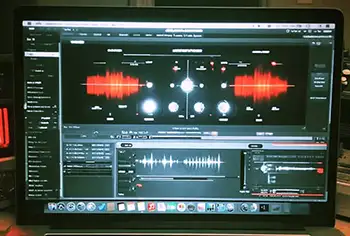
The Secret Weapon: Waves Scheps Parallel Particles
Here’s a “secret weapon” plugin that plays a huge role in the final character of the toms: Waves Scheps Parallel Particles. Dan is quick to point out this is not an an EQ. It’s a harmonic exciter that adds distinct flavors of distortion in four different bands.
- Sub: Adds low-end weight with a character similar to Waves’ R-Bass, generating low-frequency harmonics. Dan sets this around 63Hz to give the floor toms serious heft.
- Thick: This knob adds body and power in the midrange.
- Bite & Air: These bands add the aggressive, “bity” texture that helps the toms cut through the mix without needing more high-frequency EQ.
The result is an aggressive, harmonically rich tone that feels like it’s being pushed through a multi-band compressor. It’s not smooth; it’s gritty and helps the toms command attention. This kind of dynamic harmonic processing is a key part of modern metal compression secrets.
Creating Space and Final Polish
With the core tone dialed in, the final steps are about placing the toms in a space and ensuring they don’t overpower the most important elements of the song.
Adding Ambience with Reverb
For space, Dan sends the tom bus to a reverb, in this case, Valhalla Room.
- Mode: Large Room.
- Filtering: He uses the built-in high-cut filter to trim more top end off than he did for the snare reverb. This pushes the tom ambience further back in the mix, so it doesn’t fight with the cymbals or vocals for high-frequency space.
The reverb’s early reflections and slap-like decay also have a cool side effect: they subtly increase the perceived length of each tom hit, giving them more sustain and impact.
Preventing “Tom Soup”
One of the coolest insights Dan shares is why bus processing works so well. When you have a dynamic processor—like a compressor or even an exciter like Scheps Parallel Particles—on the tom bus, each tom hit triggers the processor and momentarily affects the entire bus. This means when one tom hits, it ever-so-slightly ducks the ringing sustain of the others.
This prevents what Dan calls “Tom Soup,” where the resonance of multiple toms builds up into a messy, undefined rumble. Instead, each hit has its moment to shine, creating a much cleaner and punchier tom fill.
Final EQ and Leveling
To finish the chain, Dan makes two final moves:
- Final EQ Carve-Out: He uses another instance of Pro-Q to pull down a bit of the “cloudy” midrange. This is a critical step to create space for the lead vocals, ensuring Courtney LaPlante’s voice sits on top of the mix.
- Trim for Level: A simple trim plugin brings the final level of the tom bus down. Even with all this processing, the toms need to support the song, not dominate it. In this section of the song, it’s all about the vocals.
Build Your Own Brutal Drum Mixes
Daniel Braunstein’s tom bus strategy is a masterclass in efficiency and effectiveness. By combining smart routing with a powerful, layered processing chain, he creates toms that are huge, aggressive, and perfectly placed in the mix.
Here’s the rundown:
- Route all toms to a single stereo bus.
- Use a “kitchen sink” EQ to shape the fundamental tone in context.
- Add attack and pop with a transient shaper or enhancer like Spectre.
- Inject aggressive character with a harmonic exciter like Scheps Parallel Particles.
- Create space with a filtered, large-room reverb.
- Make room for vocals with a final EQ cut and control the final level.
These are the exact kinds of techniques that separate amateur mixes from pro-level productions. Following tips like these can instantly improve your sound, but imagine seeing them applied to an entire song, from raw tracks to finished master.
Spiritbox on Nail The Mix
Daniel Braunstein mixes "Holy Roller"
Get the Session
With Nail The Mix, you can do just that. Every month, you get the real multitracks from bands like Spiritbox and watch the original producer—like Daniel Braunstein—build the mix from scratch, explaining every single plugin, setting, and decision. If you’re ready to move beyond presets and truly unlock your sound, this is how you do it.
Check out the full Spiritbox mixing session with Daniel Braunstein and gain access to dozens more from the biggest names in metal when you join the Nail The Mix community.