
The parallel MicroShift trick for wider lead guitars (ft. Bullet For My Valentine)
Nail The Mix Staff
Bullet For My Valentine’s guitar work is iconic. From the thrashy riffs to the soaring, melodic leads, their sound is a masterclass in modern metal. But how do those lead guitars get so much punch and clarity, cutting right through a dense wall of rhythm guitars and pounding drums without sounding thin or harsh?
We got a look inside a real BFMV mix session with producer Carl Bown to see exactly how he tackles their lead guitars. Forget vague concepts; this is a deep dive into the specific plugins, EQ moves, and spatial effects he uses to make them shine. Let’s break down his chain, step-by-step.
The Foundation: It All Starts with Clean Tracking
Before you even think about loading a plugin, the quality of your raw recording is paramount. Carl is a huge advocate for getting the cleanest possible DI take. In a high-gain context, any unwanted string noise or resonance will be amplified into a chaotic mess that’s nearly impossible to fix in the mix.
To prevent this, two simple but crucial techniques were used during the BFMV tracking sessions:
- Taping the Strings: Any strings that aren’t being played during a lead melody get taped down. This mutes them completely, preventing sympathetic vibrations and accidental noise.
- Gaff Tape on the Headstock: A small piece of gaffer tape over the strings behind the nut can eliminate that high-pitched ringing you often get from the headstock.
As Carl puts it, high-gain amps and ringing strings that aren’t meant to be ringing are a recipe for disaster. Nailing this at the source is a non-negotiable first step.
Surgical & Dynamic EQ for Clarity and Punch
The lead guitars in this track, performed on a Les Paul, came from a Kemper profile of an 800-style amp with a Tube Screamer-like boost in front. While the core tone was great, it needed some shaping to sit perfectly in the mix.
Step 1: Carving Out the Gunk with Static EQ
The first move was to address problematic frequencies with a standard, static EQ. The goal here isn’t to reshape the tone entirely, but to perform surgical clean-up.
- Removing the “Ghost”: The first problem was a weird “ghost” resonance living around 700Hz. Carl identified this as something unpleasant that needed to go, so he notched it out with a fairly narrow cut.
- Cleaning up the “Tat”: He followed up with a few more surgical dips to remove other harsh or boxy frequencies that were cluttering up the sound.
- High-Pass Filtering: A high-pass filter was used to cut out the low-end mud and “ruly kind of nonsense,” ensuring the lead doesn’t fight with the bass and kick drum.
A word of caution: while these cuts are important, you have to be careful not to overdo it. If you cut out every single mid-range frequency, you’ll be left with no energy. The lead needs that body to poke out from the rhythm guitars. For more fundamental EQ strategies, check out our guide to carving your core EQ for mixing modern metal.
Step 2: Taming Boxiness with Dynamic EQ
After the static cuts, there was still a bit of boxiness around 500Hz that would build up on certain notes. Instead of making another permanent cut, Carl reached for a dynamic EQ—specifically, the Waves F6.
This is a “do the least damage” approach. The F6 was set up to only dip that 500Hz region when the signal crossed a certain threshold. This means the boxiness is controlled only when it becomes a problem, leaving the guitar’s fundamental tone and upper-mid character intact the rest of the time. It’s a surgical tool that keeps the sound natural and powerful.
Compression and Limiting: The Glue and Control
With the tone cleaned up, the next step is to control the dynamics and lock the lead in place.
The CLA-3A for Character
For lead guitars, Carl often reaches for the Waves CLA-3A. It’s not about slamming the signal into oblivion. He used it for just a bit of peak reduction, which has the added benefit of imparting a certain character and attitude that works perfectly for aggressive leads. It helps the notes sustain evenly and feel cohesive. As an alternative, he also gives a shout-out to the PSP VintageWarmer, another excellent tool for adding character and warmth.
This is a perfect example of using compression for more than just dynamic control; it’s about adding vibe. If you want to dive deeper, explore our ultimate guide to metal compression secrets.
Pinning It Down with a Limiter
To ensure the lead guitar stays totally solid and stationary in the mix, a limiter was placed after the compressor. This isn’t about cranking the level for loudness. It’s a final layer of control that catches any remaining stray peaks and holds the lead guitar firmly in its spot, so it never jumps out or gets lost.
Creating Epic Width and Space
A great lead part needs a sense of space and dimension. Carl uses a combination of stereo widening, delay, and strategic panning to create a huge soundscape.
The MicroShift Widening Trick
To give the leads a professional-sounding width without making the center signal blurry, Carl used a classic trick inspired by the Eventide H3000.
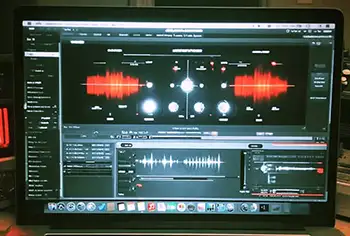
He set up an aux bus with the Soundtoys MicroShift plugin set to 100% wet. The lead tracks are then sent to this bus. This creates a stereo-widened version of the signal that sits alongside the main, centered guitar track. The result is a lead that sounds massive and wide, but still has a solid, focused core.
Adding Depth with Delay
For that classic melodic lead sound, a dedicated delay bus is essential. Carl set up another aux track, this time with the Soundtoys EchoBoy. He started with the “Crispy Tape” preset as a foundation, then timed the delay to a quarter note to sync perfectly with the song’s tempo. A bit of this delay sent from the lead track adds depth and a sense of echo without washing out the performance.
Strategic Panning for Dynamic Impact
Not all leads are created equal, and they shouldn’t all occupy the same space. Carl uses panning to give different sections of the song unique impact:
- Intro/Riff Leads: The leads that are part of the main, heavy riff are panned super wide—around 80-100% left and right. This helps the section “go bang” and feel as big as possible.
- Verse Leads: During the verses, the leads are brought in more narrowly to create a more intimate feel and leave space for the chorus to feel even bigger.
- Chorus Leads: The main chorus melodies are panned somewhere in between, around 65%, giving them presence and width without being distracting.
This technique of automating pan positions creates a dynamic, engaging listening experience where each section has its own defined space.
Take Your Mixes to the Next Level
These techniques provide a powerful and effective chain for mixing modern metal leads. From disciplined tracking to a multi-stage approach of surgical EQ, character compression, and creative spatial effects, every step has a purpose.
Bullet For My Valentine on Nail The Mix
Carl Bown mixes "Over It"
Get the Session
Applying these tips can instantly elevate your lead guitar tones. But imagine seeing how Carl Bown builds the entire mix around them—how he fits in the bass, drums, and vocals to create a polished, release-ready track. With Nail The Mix, you can do just that. Every month, you get the real multitracks from a massive song and watch the original producer—like Carl Bown—mix it from scratch in an exclusive, live-streamed class. It’s your chance to see these techniques in action and ask the pros your questions directly.
If you’re ready to unlock your sound and mix modern metal beyond presets, there’s no better way to learn than from the people who are making the records you love. Click here to see how Carl Bown mixed this entire Bullet For My Valentine track from start to finish.