Download Left To Suffer “Disappoint Me” raw multi-tracks
Nail The Mix Staff
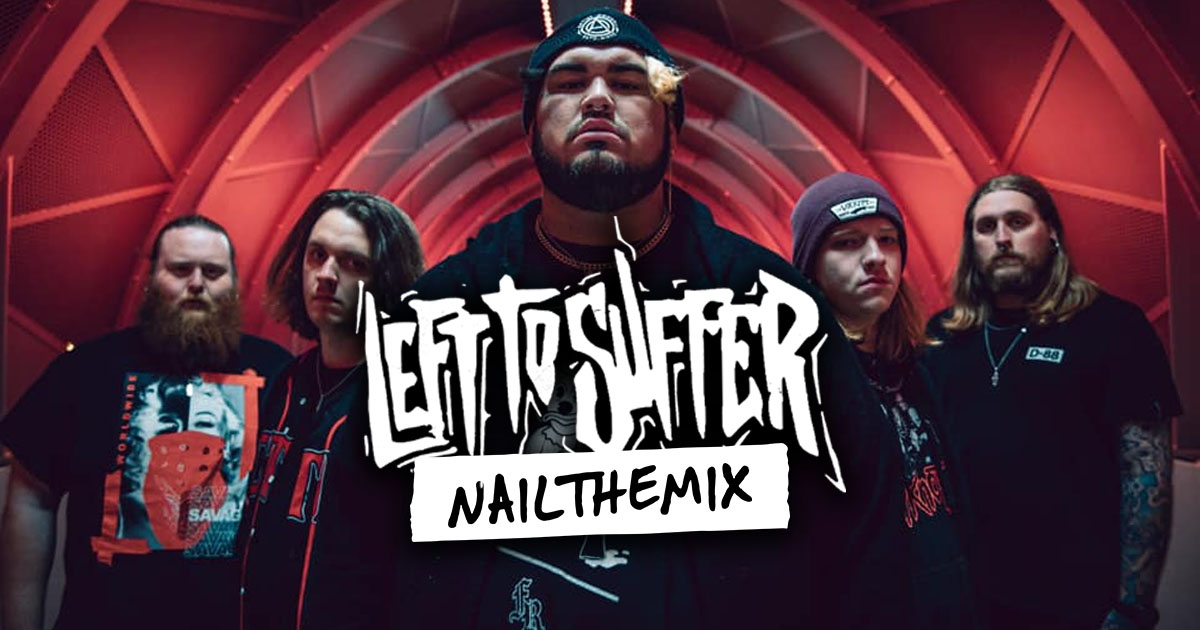
Double-headers are awesome. Especially when they feature two killer bands like Left To Suffer and Kingdom of Giants, both mixed by the ridiculously talented Matt Thomas. We got our hands on the raw multitracks for Left To Suffer’s “Disappoint Me” and Kingdom of Giants’ “Wayfinder,” and let’s just say each song presents a completely unique set of mixing challenges.
One track is a masterclass in managing earth-shattering low-end, while the other is all about production, programming, and vocal layering. Let’s break down what you’re up against when you open up these sessions.
Left To Suffer: The Low-End Jigsaw Puzzle
Right off the bat, “Disappoint Me” is an exercise in pure heaviness. This band has an infectious groove and some of the sickest vocals in the game right now. But the real challenge? Making all that brutal energy translate into a clear, punchy mix.
Wrangling Low-Tuned Guitars
When you open the session, you’ll find some badass-sounding rhythm guitar tracks, along with the DIs. But these aren’t just low-tuned guitars—they’re low. And as if that wasn’t enough, there’s a pitch-shifted DI track an entire octave lower. We’re talking about frequencies so low they fight for space with everything else in the mix. This is where the real work begins.
The Kick and Bass Battle
With guitars tuned into the sub-terranian depths, the eternal question arises: where do the kick and bass live? This is arguably the biggest struggle when mixing modern heavy music. The fundamental notes of the guitars are occupying the same frequency range as the punch of the kick and the body of the bass.
Getting this relationship right isn’t about just turning things up or down. It demands surgical precision. You have to make conscious decisions about which instrument will own which part of the low-end spectrum. This often involves strategic high-pass filtering on the guitars to clear out mud, careful sidechain compression, and precise EQ moves to create distinct pockets for each element.
The Sub-Bass Onslaught
Just when you think you’ve carved out space in the low end, you find the ear candy folders. Matt Thomas is a master of sub-bass work, and this track is loaded with it: sub drops, explosions, cinematic booms, and filthy, saturated loops that sound like they were pulled straight from a trap song.
These aren’t just background noise; they’re integral parts of the song’s impact. The challenge is making these powerful, 808-style hits cut through an already dense mix without turning the entire low-end into a muddy mess. A clue lies in the tracks themselves—you can hear some saturation on them. Adding harmonics to these low-frequency sounds helps them become audible on smaller speakers and cut through the wall of guitars, a key trick for modern metal production.
Raw, Powerful Vocals
The vocalist in this band has an insane flow and delivery. The raw tracks are dynamic, powerful, and not overly processed on the way in. You can see they might have been tickled by a compressor, but they aren’t squashed. This is great, as it gives you total control. However, it also means it’s on you to tame the performance and make it sit consistently on top of the instrumental chaos. This is where mastering your compression toolkit becomes vital to glue the performance together without killing its raw energy.
Kingdom of Giants: Production and Programming Mastery
Switching gears, “Wayfinder” by Kingdom of Giants is a different beast entirely. It’s less about pure low-end brutality and more about intricate production, blending organic and electronic elements, and managing complex vocal arrangements.
Building Tones from Scratch with Guitar DIs
The first thing you’ll notice is that there are no pre-printed guitar tones. You get the raw DIs. For a learning producer, this is a golden opportunity. Forget just mixing; this is a masterclass in production. You’re challenged to dial in your own tones from scratch using your favorite amp sims and plugins, and try to beat the tones on the final record. It’s an essential skill for any modern mixer, as you’ll often be asked to re-amp or enhance DI tracks sent by clients.
Driving the Mix with Programmed Drums
Instead of a fully mic’d up acoustic kit, this session is built on programmed drums, complete with MIDI files. This presents a totally different workflow. Your job shifts from fixing phase issues and balancing mics to choosing the right samples, programming realistic velocities, and making a programmed kit feel human and powerful. It’s a prime example of how versatile a modern mixer needs to be.
The “Industrial” Vibe: Weaving in Synths and FX
Matt Thomas’s programming skills are on full display here. The track is filled with synth layers, programmed beats, risers, and impacts that give it a unique, almost industrial character. The challenge isn’t just balancing these elements, but integrating them so they feel like a cohesive part of a heavy rock song. It requires a different approach to space, depth, and texture than a straight-up four-piece band.
Juggling Two Lead Vocalists
To top it all off, this song features two distinct lead vocalists, plus gang vocals and various layers. Getting two singers to sound equally badass on the same track without fighting for space is a huge challenge. It requires careful EQ, panning, compression, and reverb strategies to give each vocalist their own sonic identity while ensuring they sound great together.
Why Mixing Both Makes You a Better Producer
These two sessions are the perfect illustration of why practice is everything. If you only mix one style of song, you only solve one type of problem.
By tackling both, you’re forced to switch your brain from managing real, low-tuned chaos to dialing in your own tones and blending intricate programming. You’ll move from battling sub-bass frequencies with Left To Suffer to crafting a wide, polished vocal landscape for Kingdom of Giants. This is the kind of deliberate practice that accelerates your growth and teaches you how to mix music across different subgenres.
Left to Suffer on Nail The Mix
Matt Thomas mixes "Disappoint Me"
Get the Session
Imagine not just working on these tracks, but watching the guy who actually mixed the records, Matt Thomas, do it himself. That’s what Nail The Mix is all about. You get the raw multitracks for both sessions to practice on, and then you get to watch Matt mix them from scratch, explaining his every move. If you’re serious about taking your skills to the next level, there’s no better way to learn than by doing and getting a look inside a pro’s session. Getting access to these sessions is the first step to truly seeing how top-tier records are really made.
Go grab the multitracks now and see how you’d tackle these awesome and challenging songs. Happy mixing