Sidechain ducking guitar low-end on tom hits for a cleaner mix (ft. Between The Buried And Me)
Nail The Mix Staff
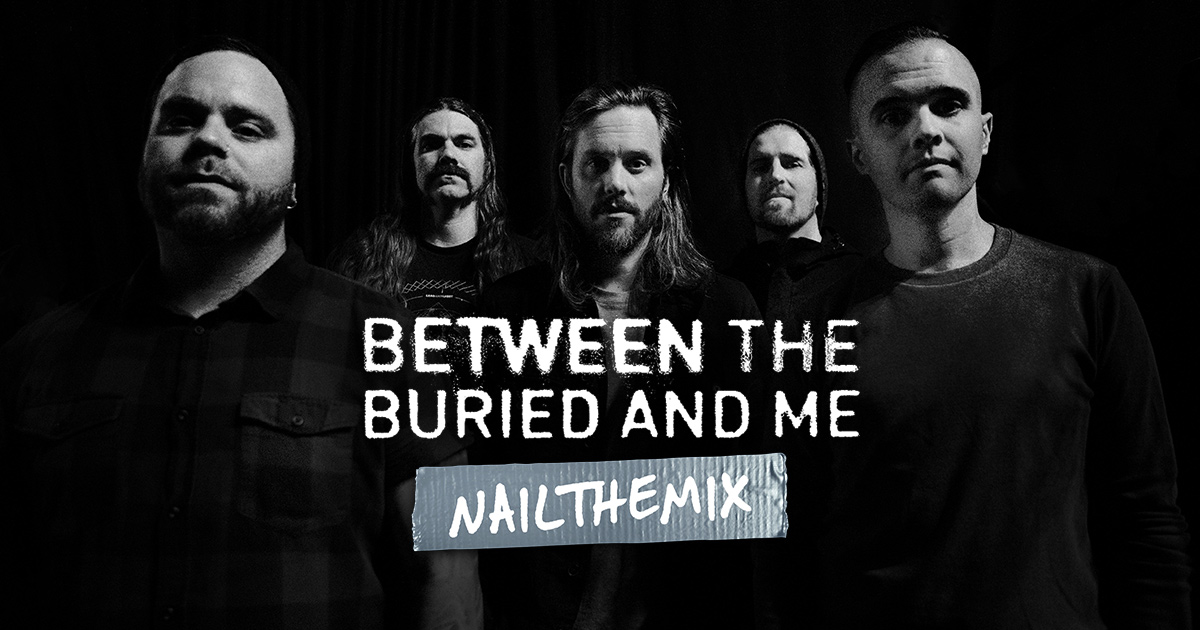
Between the Buried and Me have a guitar sound that’s as complex and dynamic as their songwriting. It’s dense, it’s intricate, but it’s also clear and powerful. Ever wonder how a sound like that comes together in the mix? We got an inside look at how legendary producer Jens Bogren (Opeth, Arch Enemy, At the Gates) tackled the rhythm guitars for the BTBAM track “Millions.”
It’s not about some single magic plugin. Instead, it’s a series of small, intentional decisions—from the re-amping stage to some clever bus processing—that combine to create a polished, massive guitar wall. Let’s break down his specific approach.
The Foundation: Building the Core Tone
Before a single EQ was touched, the core of the tone was established during re-amping. Jens didn’t just plug into one amp and call it a day; he built a wide stereo image right at the source.
Amp and Pedal Choices for Stereo Width
The amp of choice was a Mesa/Boogie Dual Rectifier—specifically, one of the coveted “pre-500” models known for a slightly different character. Jens noted this amp excels at the big, open chords BTBAM uses, providing excellent string separation without getting too dense or “stuck” like some amps optimized purely for palm-muted chugging. The amp was cranked through a Mesa oversized Rectifier cabinet loaded with Celestion Vintage 30s.
Here’s where it gets interesting. To create a natural-sounding stereo field, he used a different boost pedal for the left and right guitar tracks:
- Left Channel: A “Keeley-modified” Ibanez Tube Screamer. This mod helps the pedal retain more low-end information, giving one side a slightly fatter character.
- Right Channel: A Maxon OD808 Overdrive. This classic green pedal provides a different flavor of mid-focused tightening.
By using two distinct pedals pushing the amp, you get subtle harmonic and response differences between the left and right sides. This simple trick creates a wider, more engaging stereo image than just double-tracking with the exact same signal chain.
Smart EQ: Carving Space in the Mix
With a solid re-amped tone, the next step is making it fit in a dense progressive metal mix. This involves both basic cleanup and surgical adjustments on a group bus.
Basic Cleaning on Individual Tracks
Before grouping the guitars, each track got some initial treatment with the Brainworx SSL channel strip plugin.
First, a simple high-pass filter (or low-cut) was applied around 50Hz. This isn’t about thinning out the tone; it’s a “safety” cleanup to remove useless sub-low rumble that just eats up headroom and clashes with the bass and kick drum.
Jens also used a cool trick within the Brainworx plugin: the “Random Channel” button. This feature emulates the subtle sonic differences between individual channels on a real 72-channel SSL console. By assigning a different “channel” to the left and right guitars, you introduce tiny variations in the frequency and phase response, further enhancing the stereo width and giving the mix a more analog, less sterile feel.
Surgical Bus EQ for Presence and Clarity
Instead of applying major EQ moves to each guitar individually, Jens routed them to a stereo guitar bus and used a single EQ there. This ensures both sides are treated cohesively. While he’s a fan of the Flux E-Pure, he used the ever-popular FabFilter Pro-Q for this. The moves were subtle but crucial for making the guitars pop without becoming harsh. Applying smart EQ strategies for metal is all about these kinds of calculated adjustments.
Adding “Air” with a High Shelf
To bring the guitars forward, he added a gentle high-shelf boost. The key is where he boosted: way up in the “air” band, above the main frequencies that cause harshness. This adds presence and excitement, and any potential fizziness is cleverly masked by the cymbals and hi-hats in the full mix.
The “Experience Dip” for Vocals
Next, he carved out a small dip in the low-mids. This move wasn’t in response to a problem he was hearing, but was instead an “experience-based” cut. He knows this is where the fundamental frequencies of the vocals will need to sit, so he proactively creates a pocket for them to live in.
Taming High-End Fizz
Finally, he identified a small, precise frequency buildup in the upper-mids that could start to sound nasty when combined with the cymbals. A narrow cut here cleaned up the top end without making the guitars sound dark.
The “No Compression” Compression Approach
Surprisingly, Jens stated he rarely uses traditional compression on heavy rhythm guitars. Why? Because heavy distortion is already a massive form of compression. The amp and pedals have already squashed the dynamic range significantly. He finds that adding a compressor on top of that often just sucks the life and low-end punch out of the tone.
However, that doesn’t mean he leaves the dynamics completely untouched. He uses a far more advanced technique for control.
Next-Level Low-End Control with Multiband Dynamics
This is where things get really cool. To keep the low-end of the palm mutes tight and to ensure they don’t fight with other instruments, Jens uses multiband compression in a very specific way with the Waves C6 Sidechain plugin.
The Tom Ducking Trick
The biggest problem in a dense metal mix is often low-mid frequency buildup. When a powerful tom fill happens, it’s fighting for the same space as the low-end “chug” of the guitars. Jens’ solution, a trick he picked up from producer Brett C., completely solves this.
Here’s the setup:
- Create a Send: Send your tom tracks (pre-fader) to a spare bus in your DAW. Let’s call it Bus 51.
- Add the Plugin: Place the Waves C6 on your main guitar bus.
- Set the Sidechain: Set the C6’s sidechain input to listen to Bus 51 (the tom signal).
- Target the Frequencies: Use one of the C6’s bands to target the low-end of the guitars, focusing on the 100Hz to 150Hz range.
- Engage: Set this band to react to the external sidechain.
Now, whenever the toms hit, the plugin automatically ducks the low-end of the guitars just for a moment. You may not even consciously “hear” it happening, but the result is instant clarity. The toms punch through without turning the low-end of the mix into mud. It’s a surgical move that keeps the sum of your low-end in check.
A Word of Caution: Phase Shift
Jens added an important caveat: using multiband processors can introduce subtle phase shifts around the crossover frequencies. On a source like rhythm guitar, this can sometimes alter the tone in an undesirable way. It’s a powerful trick, but one you should always A/B to make sure it’s helping, not hurting, your overall guitar sound.
See It All in Action
These techniques—from using different boost pedals to surgical bus EQ and sidechained multiband compression—are the kinds of pro-level details that separate a good mix from a great one. They are fantastic tricks to apply in your own productions right now.
Between The Buried And Me on Nail The Mix
Jens Bogren mixes "Millions"
Get the Session
But reading about it is one thing. Imagine being a fly on the wall, watching Jens Bogren make these moves in real-time, explaining every decision as he mixes the actual multi-tracks for BTBAM’s “Millions.” With Nail The Mix, you can. You get to download the very same tracks and watch the original producer craft the final song from scratch.
If you’re ready to move beyond presets and learn how the pros truly sculpt world-class metal tones, check out our in-depth mixing courses. Join the community at Nail The Mix and see how sessions like this one from Between the Buried and Me come to life.