How To EQ Cymbals With Soothe (ft Architects & Henrik Udd)
Nail The Mix Staff
Let’s talk about the drum sound on an Architects record. It’s massive, punchy, and crystal clear, forming the punishing backbone of their sound. A huge part of that clarity comes from the cymbals—they’re bright and aggressive but never harsh or overwhelming. So, how does a world-class producer and mixer like Henrik Udd take expertly recorded drums and push them from good to truly great?
We got a look inside his Pro Tools session for an Architects track, and he dropped some killer knowledge on how he approaches overheads and cymbals. It’s a masterclass in being both surgical and musical. Forget broad-strokes processing; this is about identifying problems, enhancing what’s good, and making every piece of the kit work together. To see exactly how he does it, you can watch his full Nail The Mix session.
Let’s break down his step-by-step process.
Processing the Main Overheads for a Polished Foundation
The overheads are the glue of the drum kit, capturing the overall picture. Henrik’s approach here is about cleaning them up and adding a touch of character without destroying the natural sound.
H3: Start by Taming the Snare
Even in the best recordings, the snare can be a bit overbearing in the overhead mics. Before reaching for any other processor, Henrik’s first move is often to gently tame the snare bleed. He mentions just knocking it down a touch. This isn’t about heavy-handed gating or automation, but a subtle dip to create more space and control without making it sound unnatural.
H3: Surgical EQ for Supreme Clarity
Next up, it’s all about finding and removing annoying frequencies. This isn’t your standard low-cut filter; it’s a surgical operation. Using an EQ plugin like the FabFilter Pro-Q, Henrik hunts for the most offensive sound in the cymbals—that harsh, “whistling” tone that can build up.
For this track, he identified a nasty peak around 4.2kHz. With a narrow Q, he carves that frequency out. The difference is night and day. When you bypass the EQ, the harshness is immediately obvious, even if you didn’t notice it before. This is a crucial step in modern metal production; cleaning up these resonant peaks in your cymbals prevents listener fatigue and makes space for the guitars and vocals to shine. Mastering these kinds of EQ strategies for mixing modern metal can transform your mixes.
H3: Warmth and Glue with a Touch of Compression
With the harshness tamed, Henrik adds a bit of warmth and cohesion. He uses a compressor, but not for aggressive peak reduction. The goal is subtle—just enough to bring the elements of the overheads together and add a slightly warmer character. He describes it as making the sound “smoother.” A light touch of metal compression can act as a “glue,” turning a collection of sounds into a unified instrument.
Integrating Spot Mics for Width and Impact
While overheads provide the main picture, spot mics on specific cymbals (like Chinas, splashes, and rides) give you control over their placement and impact in the mix.
H3: To Cut or Not To Cut? The Bleed Debate
A common question is whether to strip-silence the gaps between cymbal hits to remove bleed. Henrik’s answer? Not usually. He prefers to leave the bleed in, as long as it isn’t overly distracting. That bleed from the spot mics adds to the overall drum sound, and cutting it all out can sometimes make the kit sound sterile and disconnected. The key is that the spot mics are blended in underneath the main overheads, acting as reinforcement rather than the primary source.
H3: EQ and Panning for Cohesion
Henrik’s treatment for spot mics is methodical.
- Panning: First, he listens to the main overheads to identify where that specific cymbal sits in the stereo field and pans the spot mic to match. This ensures a cohesive and natural stereo image.
- EQ: Just like with the overheads, he applies corrective EQ. This always starts with cutting unnecessary low-end to clean up mud. Then, he hunts for harsh frequencies, often finding something unpleasant around the 3-4kHz range to notch out.
Interestingly, for this surgical notching, he’s a big fan of the stock Pro Tools EQ. He mentions that its default Q setting is the “perfect amount” of narrowness for cleanly removing problem frequencies without affecting the surrounding sound. It’s a great reminder that you don’t always need the fanciest plugin to get the job done.
Pro Tricks for Samples and Taming Harshness
Beyond the core overhead and spot mic processing, Henrik has a few more tricks up his sleeve for adding punch and maintaining control.
H3: Giving Samples the Body They Need to Survive
In this session, a bell sample was added to the arrangement. A common problem with transient-heavy samples like bells is that they can sound great in solo but “magically disappear” once the full, dense mix is playing. To combat this, Henrik processes the bell to give it more “body,” likely adding saturation or EQing to emphasize its fundamental frequencies. This ensures it has enough weight to cut through the wall of guitars and drums.
H3: The Modern Approach: Taming Cymbals with Soothe
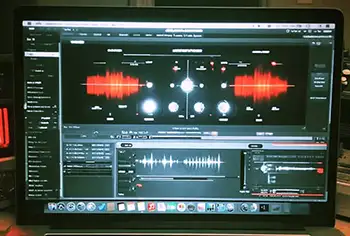
While he demonstrates the manual EQ notching method, Henrik gives a shout-out to a powerful modern tool: Oeksound’s Soothe. He notes that for taming harshness and notching out annoying resonances in cymbals, a plugin like Soothe can give you “excellent results” much faster. It actively listens to the signal and dynamically suppresses harsh frequencies, which is a massive time-saver for getting clean, smooth cymbal tones.
Bring It All Together In Your Mixes
Henrik Udd’s approach is a testament to the power of careful, intentional mixing. It’s not about slapping on presets; it’s about listening critically and making precise moves.
The key takeaways are:
- Start with Control: Gently tame snare bleed in the overheads for a cleaner foundation.
- Be Surgical with EQ: Hunt down and remove specific harsh frequencies (like that ~4.2kHz whistle) to make cymbals pleasing, not painful.
- Use Subtle Compression: Glue your overheads together with a touch of compression for warmth and cohesion.
- Blend, Don’t Replace: Use spot mics to reinforce and pan cymbals accurately, leaving the bleed in for a more natural sound.
These are techniques you can apply to your own drum mixes right now. But seeing a pro like Henrik Udd apply them in real-time, explaining every decision, is a completely different level of learning. On Nail The Mix, you get to be a fly on the wall for exactly that.
Architects on Nail The Mix
Henrik Udd mixes "Gone With The Wind"
Get the Session
Every month, you get the real multi-tracks from a massive song and watch the original producer mix it from scratch. If you want to see how this Architects track came together from raw tracks to a finished master, check out Henrik Udd’s full session. It’s your chance to unlock your sound and start mixing modern metal beyond presets.